JuNoWriMo Participant Interview A.M. Schultz

Here is the next installment of my JuNoWriMo Participant Inteviews.  Please welcome A.M. Schultz.

Tell me a little about what you are writing for Junowrimo.

I had been toggling ideas for three different WIPs prior to JuNoWriMo. The one I choice to focus primarily on for JuNoWriMo has been a fantasy piece. Choosing Fantasy over the other two has had some advantages, but there is so much world building required that much of my “word count”  has been used to outline characters, nations, etc. I’m not sure I’d have made nearly as much progress without the challenge aspect, though.

Is this your first time doing this type of challenge?

Something this formal, yes. I used to write fiction pieces on weekly deadlines here-and-there, but this is my first time taking a multi-writer challenge of this magnitude.

How has it meet your expectations so far?

It’s been “different,” in the sense that I won’t have 50,000 pages of a manuscript completed at the end, but I will have a much more developed world at my disposal by the time the month is done. I started 7 days into the challenge, and intentionally took on a project that I knew would need tons of polishing either way.

What was your writing schedule like this past week; time of day, # of words per day.

My schedule has been pretty bonkers. I am a full-time student through the year and actually took the Summer off, so I assumed I’d have tons of time to just write. I still hold a full-time job, too, and between setting up a better platform for my website, redoing the graphic work, etc, and then working on book cover graphics, blog posts,  I’ve just had to squeeze writing in when I can.

I carry a pocket Moleskine notebook about with me everywhere, though, and sketch an idea down, expand it in one of my larger notebooks, then type out the ideas later. For the fantasy world, I actually used the PC game “Civilization IV” by Sid Meier to create the map (which crashed on me after about six hours of plotting the world the first time), and it has been incredibly helpful.

All-in-all, JuNoWriMo work and miscellaneous stuff, I’m logging a good 60-70 hours a week, so hopefully this all pans out eventually.

Did you do any planning for Junowrimo?  If so what type of planning and how are your plans working out so far?

I actually found out about JuNoWriMo on the 7th of the month after seeing a few friends on my Twitter feed using the #JuNoWriMo hashtag, so no planning. I was aware of NaNoWriMo, and had told myself I would consider taking that challenge later in the year. If anything, I think I realized that this isn’t the type of challenge you can complete successfully without some type of gameplan.

What is your word count as of June 22th?

I’ve got about 8,500 words, which is WAAAAAY off the mark. But, I have a better idea of where I want the story to go than had I just started writing aimlessly, so I’ll take it. I’m hoping to be sitting around the 15,000 mark by the end of the challenge.

To learn more about AM Schultz, please be sure to visit his site and following him on Twitter.

Website: amschultz.com and Twitter:  @am_sch

My Weekly Update – Junowrimo, Job and Just Freakin Cool

Junowrimo

Going into week three, I have a handle on JuNoWriMo. In fact, I am kicking junowrimo’s butt.  And, I am pretty excited about it.  I am over 40,000 words in 16 days.  I have about 20,000 words to go before I finish my 1st draft of my 1st novel.  That is my new goal for June.

It hasn’t been easy.  Far from it, but what I am most please about it my preparation has paid off.  Even when I though I would run out of story, taking a day to step back and review my outline revealed that the story wasn’t supposed to end where I originally thought. It just transformed the story even further and I love it even more.

Lessons learned, preparation is key, but being open to new ideas and adjusting you plan my reveal something better.

Favorite passage written last week was this toast that John makes in front of his best friend and Sydney’s brother about how they are going to maintain their relationship when Sydney goes back to China:

“7 days ago, I meet this girl and instantly knew that I had to get to know her.  There was just something about her, that I am still trying to figure out.” Looking at Sydney, John continued. ” Now I don’t know whether it was God, the universe, karma, Budda or The Force, but something in this world has saw fit to bring us into each other lives and I think that force has earned our respect.” Sydney had no idea where John was going with this little speech or declaration, but she was all ears.
“I am not typically one to just let things happen and we all know Sydney has to know the answers to everything before the questions are even asked.  But, baby you can’t research the outcome of this one.  All we can do is trust that the force that brought us together will keep up together.  Even when we are miles apart.” to Kevin and Dennis, “And, that the people who love us the most will remind us if we try and take control this love thing.”
“Cheers”

*Now this is unedited, but does it make sense?  Let me know.

Job

There is one definition of the word job that says, “Anything a person is expected or obliged to do; a duty; a responsibility. That is how I have been think of my writing lately and I am happy to report that it has transformed not only my attitude, but the quality of my writing as well.

Now, no one wants to be obligated to do something, but if you think about it.  There are obligations and responsibilities that we take on in our paying jobs every day.  We do them because we want to get a pay check, we want to get a good review, we want to move up and be recognized for a job well done.

Well that is the same with my writing “job”.  Although I don’t get a paycheck for it.  I have an obligation and a responsibility to not waste this gift.  I have a responsibility to myself to respect the time I have dedicated to this so far and to my blog readers and fellow writers who are so supportive and who have given me great advice.

So, writing is my job and finally, I have a job a love.

Just Freakin Cool New Followers

*If I missed someone, sorry and thank you.

This Weeks Schedule

Monday – Junowrimo Participant Interview – James Eggebeen – He has already hit 50,000 words. 
Tuesday – Movie Quotes
Wednesday – Writer Wednesday Blog Hop – the photo this week is so cool.
Friday – Junowrimo Participant Interview – EM Castellan
Sunday – My Weekly Update
 

JuNoWriMo Participant Interview James Eggebeen

It is the end of Week 2 of Junowrimo and I would like to introduce you to Junowrimo Winner James Eggebeen.

Tell me a little about what you are writing for Junowrimo.
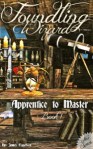
I am writing the second book in my Fantasy Series. The first one Foundling Wizard is about a young Wizard whomeets a young Sorceress on his way to Amedon where he hopes to be trained. They find out that they are destined to work together to defeat the Evil Priests, who kill young Wizards, and take their power.
The second book is Wizards Education. Now they are on their way to Amedon when they get derailed by not only by the Priests, but a rogueWizard. The Wizard wants to keep them out of the hands of the Priests, but also wants to keep them away from Amedon, so he can take control of the Wizards Council. They have to face challenges that test their commitment to magic and to each other in order to survive.
 The web site for this series of books is www.loritwizard.com.
Is this your first time doing this type of challenge?
Yes, this is my first time doing one of these. I thought it would be nice to meet a few other authors and stay motivated to keep writing.
How has it meet your expectations so far?
It’s far exceeded my expectations. I’ve made a bunch of new friends, and even re-connected with one of my old writing group partners from way back when. (waving hi to Eden Maee) I love doing the sprints. The excitement and mutual support is great. I never would have made the progress I did without the sprints, and oh yes, the competition (waving hi to Angi Black).
What was your writing schedule like this past week; time of day, # of words per day?
I usually get up at 3:00 to 4:00 AM. I drive for an hour to get to the office and then take some time to write before my work day starts. I have daily overseas calls, so I start pretty early, but I usually manage to get in an hour or two before work starts.
It takes me an hour or so to get home at night. This gives me time to think about what I want to write. Once I get home, I usually write for at least another hour or so. With the sprints, it was more like two.
This schedule lets me really think through the scenes I’m going to write, before I finally sit down. I review all of the action and dialogue in my head while I’m driving. Then it’s just sitting down and writing out what’s in my head already.
Did you do any planning for Junowrimo? If so what type of planning and how are your plans working out so far?
When I found out about this (two days before it started), I stopped writing and planned out a lot of the remainder of the novel. I was already 30,000 words into it, but I had not detailed out the whole thing. I knew that I would need some solid plot and scene design, so I went ahead and created all the scene templates before it started.
My scene template is a file where each scene lives (I am a big Scrivener fan; don’t get me started on that!).
Each scene template has the following form:
Title:
Point of View:
What changes in the scene?
What is the conflict?
Why will the reader continue reading?
I lay these out three scenes to a chapter and template twenty four chapters.
I thought I had enough material when we started, but I ran out of outline by the end of the first week. I had to take some time to outline more, and then I ran dry again. The last few days, I had an epiphany. We read linearly but don’t have to write that way, so I plotted out the ending and wrote some of that, now I have to go back and fill in the middle.
I think that’s going to work out real well. Now that I know where it all ends up, I can drive the plot there. Of course, there’s a lot more work in revision than writing. I just love that part. You get to go back and drop in all the foreshadowing and hide Easter eggs all over the place for the reader to discover later. It’s a lot of fun.
You are the first to complete the 50,000 word count for JuNoWriMo 2012. Any advice for those of us still in the trenches?
Don’t worry about the word count. The words will come. Think about what you want to write, imagine it all in your head, and then make it come alive. That’s the secret to getting a lot written.
JuNoWriMo is about setting up good habits in how you approach your work. Get into the habit of writing on a regular basis. Turn off the TV and shut down your web browser for a while each day, and before you know it you’ll have written more books than you would ever have believed possible. 
Thank you James.  Congratulations on completing the challenge!

For more information on James Eggebeen, visit his blog sites at www.jameseggebeen.com & www.loritwizard.com.

Complaints from a Frustrated Read

An expert is someone who demonstrates great skill at something due to experience, right?  So, I don’t think I am to far off base (or narcissistic) by declaring myself an expert in the art of book reading.  I have been readying books for as long I have been able to read books.  I have over 20 years of book reading experience.  I have even been tested as an exceptional reader (got the gold star in 2nd grade to prove it). I am confident in my book reading ability.

Now that I have my credentials out of the way, I would like to impart to you, my fellow writers, my knowledge and experience in recognizing frustrated fiction from a readers point of view.

Lately, I have been spreading my literary wings and reading some genres that I haven’t read before.  I have found some real great stuff out there.

I have also experiences some frustrating reads.    Now, I understand that we are all learning and growing and perfecting our craft.  My point isn’t to criticize anyone for doing what some many of us want to do.  And, anyone who has had a book published has my utmost respect.  Hell, I haven’t done it, . . . yet.

But, let’s face it.  There is some bad writing out there.

But, all is not lost.  It is my goal here to thank those writers who brave the critical world and put their stuff out there in order to teach us the following lessons:

  • Flashbacks and back story are not the same thing.  You can achieve great back story for your character without resorting to full on chapter long flash backs to where your character first meet the trauma, issue or conflict. If your character is afraid of roller coaster.  No need to tell us about the three other times she threw up from riding a roller coaster.  We as reader are smart.  We can understand a fear of roller coasters, public speaking and spiders.  No further explanation is necessary.    Now, if you character is afraid of puppies and it is central to the story, then by all means, take us back, but just once.
  • Don’t have stuff just happen to the main character just to happen.  If something happens to the main character, it should be relevant to the main plot or story.  Otherwise is just appears you are trying to fullfill some word count. Unless you character gets in a car wreck (that changes her life) on the way home from work, no need to tell me about her leaving work, driving on the free way and then arriving home.  No need to go into every thing she saw, heard and did.  Just get the good stuff.
  • Don’t lead us to assume one thing about a character and then later prove our assumptions are completely wrong.  This doesn’t create suspense or the unexpected.  It just causes confusion in the reader and disturbs the readers flow.  You don’t ever want your reader to stop reading and say, “Wait, that can’t happen.”  If you start a story about your main character’s bad luck with men and then she meets a guy and it is all wine and romance and then the rest of the book is about her conflict with her mother.  Uh, wait. What happen?  What about the boyfriend.  Stick with one theme and don’t gloss over the conflict.  To a reader, that is the good stuff.
  • Don’t tout a story as being something that every one can relate to when nothing that happens to the main character would or could happen to a person in real life. If you do this and you are a realistic fiction writer, I think you might want to rethink your genre of choice.  That sounds more like fantasy.  I can related to issues of loneliness, unfulfilled dreams, falling in love.  I can’t relate to being a vampire and trying to find my vampire mate in New York City.  Don’t get me wrong, I may still enjoy the story, but don’t advertise it as something it is not just to get me to read it.  It is what is and that should be good enough.
  • Don’t allow your secondary characters or insignificant characters to have huge issues that need to be resolve in the story.  If it doesn’t also related to the main characters, then leave it out.  Write another book for them.  If you main character is having trouble finding a job, please don’t switch gears and tell me about her best friend from high schools issues with her boyfriend.  Unless that boyfriend is going to give your main character a job, leave it out.
  • Don’t. Do not under any circumstance, no matter what, ever jump to a secondary characters POV in first person when 95% of the book was written from the main characters POV in first person.  If your main character dies, that is it.  The book is over.  Only if your character turns into a ghost  can she observe and report on happenings herself.  Someone else cannot step in now and finish off the story for us.  That’s just common writing sense.  If your story needs further explanation, write it in the epilogue or write it in a new series from that other characters POV.
  • Be original.  Don’t write a story with a story line similar to someone famous even if that person inspired the story.  We are fiction writer.  Writing a story about a famous person, isn’t fiction, it is called a biography.  Changing the names and occupation doesn’t make it an original story.

Have you ever been frustrated reading a book?  What did you learn from it?    It’s ok to tell, we are all here to help each other, right?